Our ads brought about 30,000 shoppers for around 10 cents each.
Our client is a regional discount retailer. Over six months, we built their website, shot photo and video inside their stores, made the ads, ran the ads, and watched the results closely enough to keep improving them. Here's what happened.
OUR CONTRIBUTION
We did the whole thing. Not just one piece of it.
Most marketing teams handle one or two of these steps and hand the rest off to other people. We did all of it. That matters because every step affects the next one. The ads only work if the website earns the click. The website only works if the video inside it earns trust. The video only works if it was shot well in the first place.
Figuring out what to say
What story our client should tell shoppers in the first place.
Building the website
The page that shoppers land on when they click an ad.
Footage from stores
Photos and video, in person, at client's locations.
Walkthrough video
A short tour of the stores that became the heart of the website.
Designing the ads
The images and short videos that ran on Facebook and Instagram.
Writing what the ads say
The opening lines, the script, the call to action and everything in between.
Ad budget allocation
How to split a limited budget across different ads.
Picking who sees them
The audiences and geographies the ads should reach.
HOW ENGAGING THE ADS WERE
People treated these like content, not ads.
The numbers below say something specific about how the ads landed. People shared them, saved them, reacted to them, and followed the page after seeing them — at scale, and unprompted.
The top-performing ad alone was shared 1,280 times. That's 1,280 people who saw a discount-store ad, decided someone they knew should see it too, and forwarded it — without anyone asking them to.
And they didn't just see them — they watched them.
Most ads in a Facebook feed get one second of attention before someone scrolls past. These didn't behave like that:
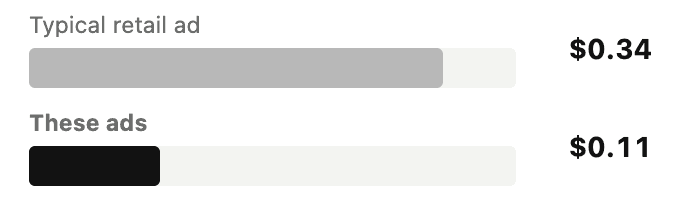
And the ads outperformed typical retail ads on Facebook.
Here's how the program compared to the published industry benchmark for retail Facebook ad campaigns:
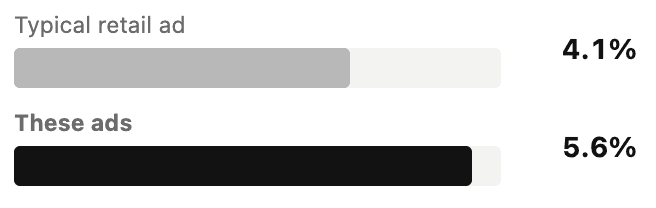
The numbers in plain terms.
170,000 - People who saw the ads
Different individuals across client's market areas. (The ads were shown more often than that — these are unique people.)
27,000 - People who clicked an ad and landed on the website
About one in six of everyone who saw an ad clicked through.
30,000 - People who went deeper and clicked through to shop
Almost everyone who landed on the page took the action we built it to encourage. The fact that the number is slightly higher than landings reflects people clicking through to more than one of the three shopping sites in the same visit.
~10¢ - What it cost, on average, to get one of those deeper clicks
For comparison, retail businesses typically pay several times that to bring a shopper to their site. The work to keep this cost low is constant, not one-time.
THE WEBSITE DOING ITS JOB
People landed, watched, and clicked through.
Over the most recent three months, the website saw about 20,000 different visitors. The average person stayed for nearly two minutes — long enough to scroll, watch the walkthrough video, and click through to where they wanted to shop. The site has only two pages on purpose: a focused homepage and one supporting page. It isn't trying to keep someone reading. It's trying to send them somewhere useful as quickly as possible.
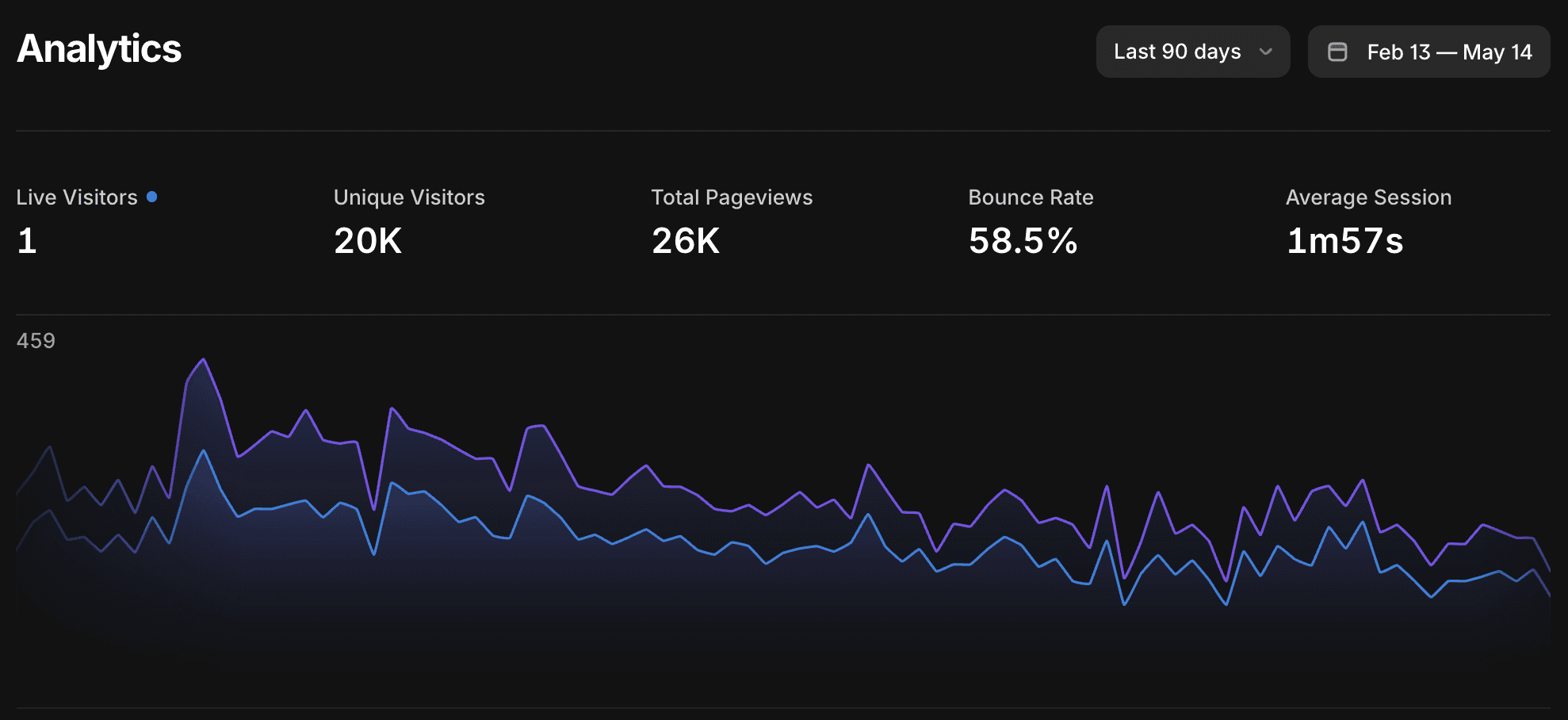
About seven out of ten visitors came directly from the Facebook ads we were running. That's the system working the way it was designed to